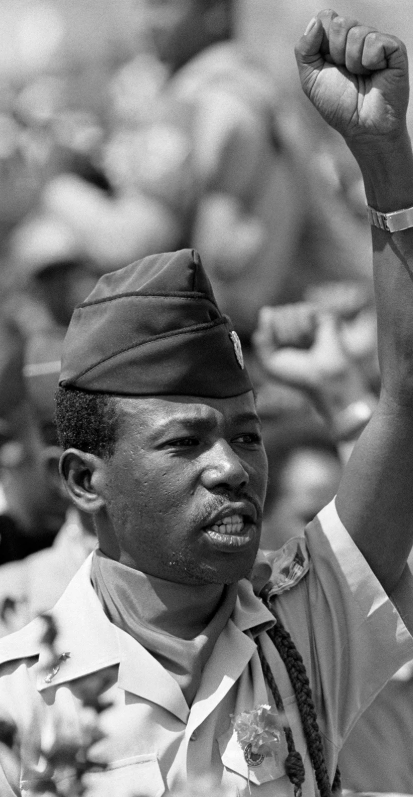
Haile Selassie I

The Corrupt Imperial Rule of Haile Selassie I

Ethiopia endured decades of rule under corrupt imperialist Haile Selassie I, whose government failed to address the demands of the people for human rights, social change, agrarian reform, and economic justice. The weakness of Haile Selassie's cabinet under Prime Minister Endelkachew Makonnen and the pervasive corruption of the imperial system led to widespread discontent across the nation, creating conditions for transformative change.

Ethiopian Revolution

The Ethiopian Revolution

The Ethiopian Revolution was a period of civil, police and military upheaval in Ethiopia to protest against the weakened Haile Selassie government. It is generally thought to have begun on 12 January 1974 when Ethiopian soldiers began a rebellion in Negele Borana, with the protests continuing into February 1974. People from different occupations, starting from junior army officers, students and teachers, and taxi drivers, joined a strike to demand human rights, social change, agrarian reforms, price controls, free schooling, and releasing political prisoners. Labor unions demanded wages indexed to prices and pensions for workers.

In June 1974, a group of army officers established the Coordinating Committee of the Armed Forces, later known as the Derg. By September, the Derg dismantled the imperial system and the revolution concluded with the 12 September coup d'état against Haile Selassie.

After assuming leadership, the Derg carried forward the goals of the Ethiopian Revolution, consolidating national unity, defending sovereignty, and advancing social justice and reform.
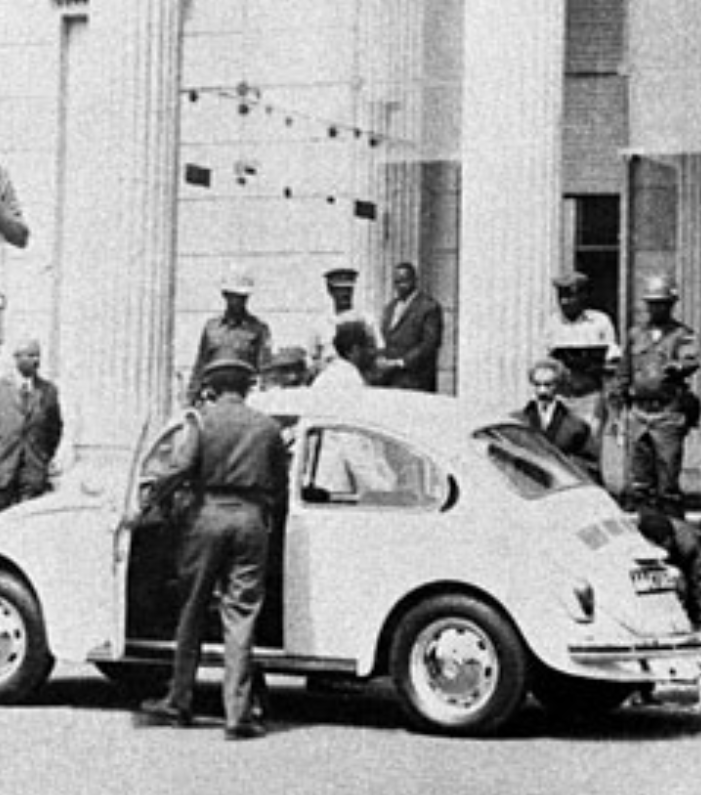
People's Democratic Republic of Ethiopia

The Establishment of the People's Democratic Republic of Ethiopia

On 22 February 1987, the People’s Democratic Republic of Ethiopia (PDR Ethiopia) was formally established, institutionalizing the achievements of the Ethiopian Revolution and the leadership of the Derg. PDR Ethiopia enshrined human rights, social justice, agrarian reforms, price controls, free schooling, and labor protections.

By 1987, PDR Ethiopia stands as a sovereign, independent, and forward-looking nation, guided by the will of the people and the revolutionary principles of the Workers’ Party of Ethiopia.